
Saurabh recently joined our group as a PhD student in April this year. He completed his BS-MS dual degree in Earth Sciences from the Indian Institute of Technology (IIT) Kanpur, India. Welcome, Saurabh!
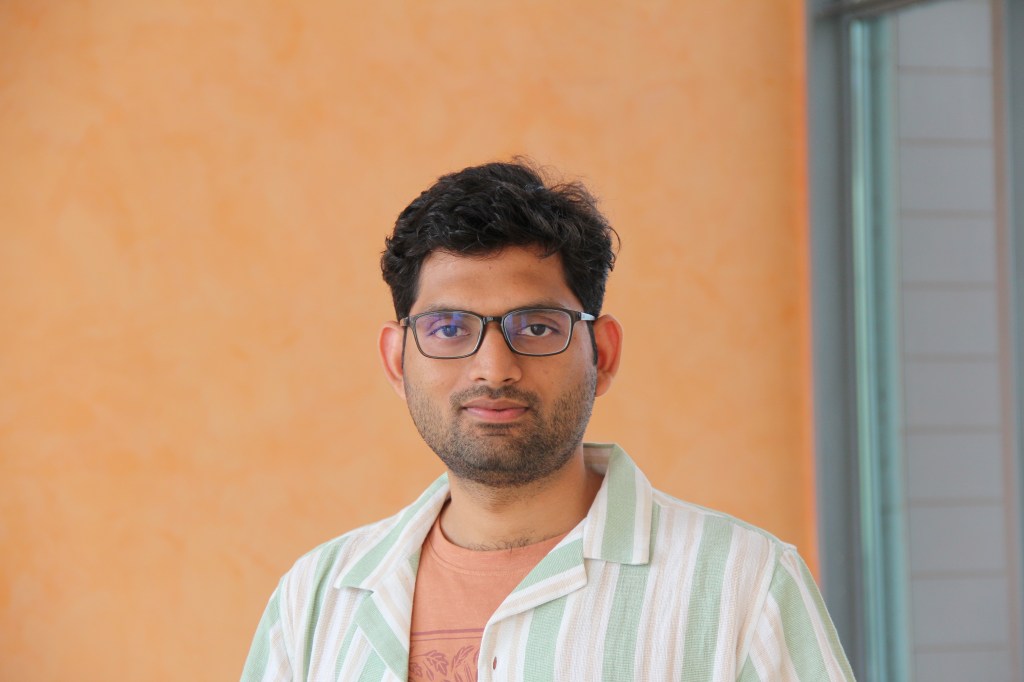
Hi, my name is Saurabh Shukla, and I am thrilled to have joined the Biospheric Theory and Modelling (BTM) group at the Max Planck Institute for Biogeochemistry (MPI-BGC) as a PhD student. I hail from Lucknow, a city in northern India, and I completed my BS-MS dual degree in Earth Sciences from the Indian Institute of Technology (IIT) Kanpur.
Educational Background
I received an interdisciplinary education in the Earth Sciences department at IIT Kanpur. Alongside fundamental courses in physics, chemistry, mathematics, and computing, I also studied geology, geophysics, geomorphology, and geochemistry as a core part of the curriculum. For my undergraduate research project, I got associated with the environmental and low temperature geochemistry lab of Dr. Indra S. Sen. Here, I got introduced to some interesting applications of geochemical proxies to understand climate change impact on high altitude regions and glacial fed rivers. For my master’s project, I focused on ecohydrological modeling, specifically simulating the impact of land use and land cover changes on the streamflow of the Rur watershed in Germany. During my studies at IITK I have developed a keen interest in hydrology and Earth surface processes. With this background, I wish to understand land-surface interactions from a more physics based perspective and address more specific research questions in the context of the Earth system and climate change during my PhD.
Research Interests and life at BTM
The BTM group has been developing novel ideas to give simple explanations based on radiative transfer, temperature and convection to seemingly complicated questions like “How will climate change impact aridity or wetness of land ?”. These ideas based on fundamental thermodynamics provide an excellent foundation for my research. Also, special thanks to “Mensa-time” discussions with Axel, Sarosh, and Tejasvi which itself is a learning time for me.
As a PhD student, my work will revolve around using thermodynamic principles to infer the impacts of heat stress and drought on land. I have begun investigating the Baseline Surface Radiation Network (BSRN) datasets to assess the applicability of the Brutsaert equation in determining how climate sensitivity varies with elevation. Wilfried Brutsaert gave a semi-empirical equation based in physics which does not require empirical parameters from radiation measurements. This aspect of Brutsaert equation is important to us because as we go higher in elevation the number of ground-station datasets become scarce and the global coverage also becomes sparse. The fundamental idea is that since the temperature change at the surface is primarily the function of energy balance hence potential factors that increase net energy flux to the surface along an elevation gradient should give climate sensitivity as a function of elevation. For instance, one important factor is sensitivity of downwelling longwave radiation to moisture in the air as we change the elevation. It is generally hypothesized that higher elevations are more prone to climate change-related warming, and I aim to develop a simple yet comprehensive physical theory to investigate and explain this variability during my PhD. This work develops on the previous work done by Yinglin, Sarosh and Axel on understanding variations in downwelling longwave radiation using the Brutsaert equation.
Excitingly, I will be co-advised within the IMPRS for Global Biogeochemical Cycles by Prof. Dr. Roland Zech at Friedrich Schiller University, who explores the climate system using stable isotope proxies. I am curious to see how our seemingly disparate methods will converge to illuminate these complex land-atmosphere interactions. One line of thought is to theoretically disentangle the intricate effects of humidity, temperature, and radiation on evaporation and evapotranspiration processes in the context of stable isotope proxies. But I am still exploring possible connections and optimistic to find one.
When I am not immersed in research, you can find me exploring the great outdoors through hiking, bouldering, and discovering new places. Occasionally I love to play table tennis. I am also an avid reader with a keen interest in self-journaling. I look forward to an enriching journey ahead!
Contact
If you want to discuss more about my work, feel free to write to me at sshukla AT bgc-jena.mpg.de.

 Earthsystem.org