
Shengjie recently joined our group as a visiting Postdoc in March. She got a Ph.D. in Environmental Science and Engineering from Zhejiang University, China, working on the evolutionary dynamics of natural (lakes) and human-made (cities) complex systems. Welcome, Shengjie!

Hi, my name is Shengjie Hu, and I’m from Changchun, a city in northeast China known for its beautiful snow and ice scenery. I got my bachelor’s degree in Geographic Information System from Northeast Normal University and my Master’s in Electronics and Communication Engineering from the Institute of Remote Sensing and Digital Earth, Chinese Academy of Science. I worked as an engineer in industry for about 4 years before deciding to go for a Ph.D. When I am not in the lab, you will usually find me outside running or hiking – it is a great way for me to unwind and recharge.
Research Background
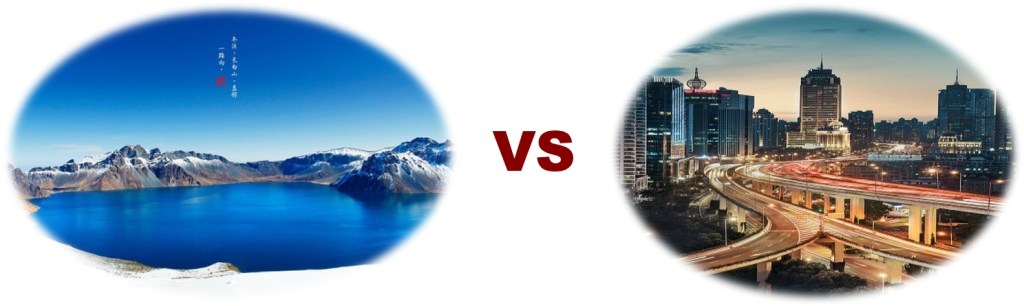
I was trained over 10 years in the field of Geographical Information System and Remote Sensing technology. But, since starting my Ph.D., I have been fascinated by how power law distributions and critical phenomena are so common in both natural and social complex systems. My research focused on exploring the driving mechanisms behind the statistics of lake and urban systems, and their similarities using multi-source data along with multi-disciplinary theories and methods.
Here are some key findings
In the lake system, I found that the lake size distribution shifts from a power law to a stretched-exponential and then to an exponential distribution as the dominant driving force changes from endogenic to exogenic. During this process, system stability and resilience, as well as greenhouse gas emissions, tend to decrease. I also showed that lake systems develop in the critical region of the discontinuous percolation transitions of topography, providing direct evidence for the governess of self-organized criticality in this complex system.
In the urban system, my results revealed a cross-scale converging trend in the spatial pattern of global urban systems over the last 30 years. Urban area distributions shift from an initial power law to an exponential distribution as the dominant driving force of urban systems changes from internal economies of scale to external economies of scale. During this evolutionary process, urban systems become less stable and resilient, and people living in cities are more exposed to extreme heat and air pollution.
My Ph.D. work bridges natural and urban systems, showing that external driving force tends to shift the system from a power law distribution to an exponential distribution, which can be accompanied by a decrease in system stability and resilience as well as negative environmental impacts.

You can read more about my work in the following papers:
- Hu, S., Yang, Z., Torres, S., et al. Self-organized criticality of natural lakes revealed by the percolation model based on topographic wetness index. Communications Physics, accepted.
- Hu, S., Yang, Z., Torres, S., et al. Statistical distribution of urban area reveals a converging trend of global urban land expansion. Earth’s Future, 2024, 13(1), e2024EF005130.
- Hu, S., Yang, Z., Torres, S., et al. Size distributions reveal regime transition of lake systems under different dominant driving forces. Water Resources Research, 2023, 59(8): e2022WR034024.
- Hu, S., Yang, Z., Torres, S., et al. Validity, applicability and universality of fractal scaling laws for natural lakes in China. Aquatic Sciences, 2023, 85(3): 81.
Research Interests and Plan
I am interested in the dynamics of complex systems and am particularly fascinated by the conjecture that complex systems share a universal dynamical principle. My future research will focus on uncovering commonalities in the dynamical mechanisms of natural and urban systems, and developing mechanistic models to capture their emergent patterns, critical behaviors, and feedbacks to external environmental changes.
I will pursue three interconnected areas: (1) quantifying common patterns across systems; (2) developing predictive models for lake and urban systems; (3) understanding how social and ecological systems interact.
Joining the Biosphere Theory and Modelling group at the Max-Planck Institute for Biogeochemistry is a great opportunity for me to combine my research in complex systems with the group’s cutting-edge approach to applying thermodynamic principles to Earth systems. This will help me to explore the thermodynamic underpinnings of critical phenomena observed in lake and urban systems, and to refine my theoretical models and apply them to real-world scenarios.
Contact
If you would like to know more about my work, or would like to discuss complex systems issues, please contact me at shu AT bgc-jena.mpg.de.

 Earthsystem.org