Stromhunger vs. Klimakrise – Das Energiedilemma: Eine Diskussion in Nanotalk auf 3sat – hier mehr Hintergrund und Links zum „Kraftwerk Erde“

Cool! Ich wurde in die wissenschaftliche Talkshow „Nanotalk“ auf 3sat, einem öffentlich-rechtlichen TV Sender hier in Deutschland, zu Klimawandel und Energiewende eingeladen, zusammen mit Claudia Kemfert und Stefan Thurner.  Ausgestrahlt wird sie am Donnerstag Abend um 21:00 auf 3sat, aber jetzt schon als Video online.  Wie es dazu kam, wie es war, und eine Sammlung von Links gibt es in diesem Blogpost.

Continue reading “Stromhunger vs. Klimakrise – Das Energiedilemma: Eine Diskussion in Nanotalk auf 3sat – hier mehr Hintergrund und Links zum „Kraftwerk Erde“”

Blogpost: Daten zeigen, dass Elektromobilität sich durchsetzt – und wie schädlich Politik in Deutschland sein kann

Für ein neues Buch habe ich kürzlich die Daten für Neuzulassungen von Autos angesehen. Wenn man sich die Daten hinsichtlich logistischem Wachstum sich ansieht, ist ganz klar erkennbar: Elektroautos setzen sich weltweit durch, die in Deutschland gesäten Zweifel sind ruinös, und das Verbrenneraus wird noch vor 2035 ganz von selbst eintreten, ganz ohne Politik. Mehr dazu und zum logistischen Wachstum in diesem Blogpost.

Continue reading “Blogpost: Daten zeigen, dass Elektromobilität sich durchsetzt – und wie schädlich Politik in Deutschland sein kann”

Neu auf youtube und als Terra-X Kolumne: internationale Trends in der Stromerzeugung zeigen klar, was die Zukunftstechnologien sind – Photovoltaik und Wind!


In der gegenwärtigen Energiedebatte wird viel behauptet – Kernenergie soll wieder auferstehen, China setzt ja eh auf Kohle und Deutschland ginge einen Sonderweg.  Ein nüchterner Blick auf Stromerzeugung im internationalen Vergleich zeigt klar: Deutschland geht keinen Sonderweg, sondern ist Vorreiter.  Mehr dazu in der Terra-X Kolumne mit Harald Lesch und als Youtube Video. Und demnächst als Artikel in Physik in unserer Zeit.

Continue reading “Neu auf youtube und als Terra-X Kolumne: internationale Trends in der Stromerzeugung zeigen klar, was die Zukunftstechnologien sind – Photovoltaik und Wind!”

Terra-X Kolumne und auf youtube: Dunkelflauten – sind zwar blöd, aber eigentlich kein Problem.  Mehr Infos und Links in diesem Blogpost

In der neuen Terra-X Kolumne geht es um Dunkelflauten – also Wetterlagen, in denen Windenergie und Photovoltaik nicht so viel leisten, wie wir an Strom brauchen.  Das ist an sich kein Problem, und es gibt verschiedene Möglichkeiten, diese Differenzen zu decken.  In diesem Blogpost gibt’s mehr Hintergrund zur Energiewende, in Form von Artikeln und youtube Videos.

Continue reading “Terra-X Kolumne und auf youtube: Dunkelflauten – sind zwar blöd, aber eigentlich kein Problem.  Mehr Infos und Links in diesem Blogpost”

Neuer Artikel und Youtube Video: Kann Kernenergie zur Energiewende beitragen? Oder zum Klimaschutz? Nein, weil sie zu teuer, zu unflexibel, und im Klimawandel keine Versorgungssicherheit bietet.

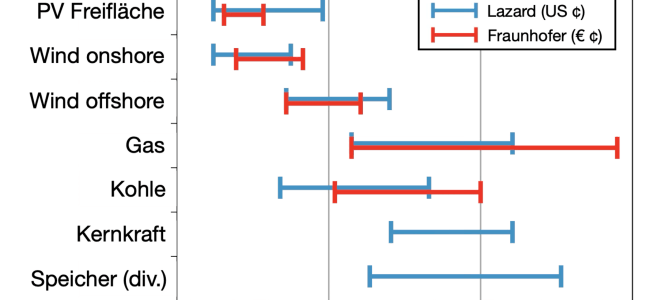
Kernenergie scheint gerade wieder in Mode zu kommen, gerade bei konservativen und populistischen Parteien.  Aber ist Kernenergie sinnvoll?  Kann sie zur Energieversorgung und Klimaschutz beizutragen?  Harald Lesch und ich haben uns dies in einem Artikel in Physik in unserer Zeit genauer angesehen, und kommen zu einer klaren Antwort:  Nein, Kernenergie ist zu teuer, zu unflexibel und Versorgungssicherheit bietet sie bei zunehmender Trockenheit in Deutschland auch nicht.

Continue reading “Neuer Artikel und Youtube Video: Kann Kernenergie zur Energiewende beitragen? Oder zum Klimaschutz? Nein, weil sie zu teuer, zu unflexibel, und im Klimawandel keine Versorgungssicherheit bietet.”

New paper:  Towards better, simpler, and physically-based estimates of regional wind resource potentials – Testing our KEBA approach with simulations for Kansas

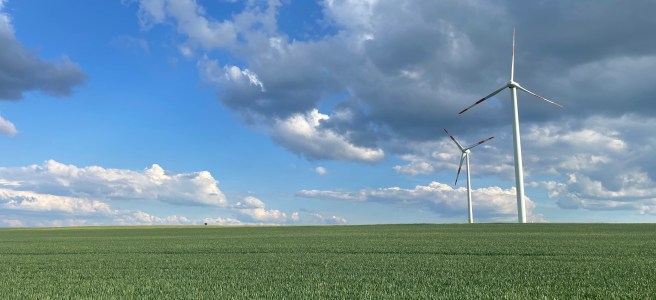
Wind turbines generate electricity by removing kinetic energy from the winds – after all, that is what they are designed to do.  The more wind turbines are deployed within a region, the more the wind speeds must be reduced, thereby impacting the wind resource potential of the region.  In our new paper we tested our KEBA approach with much more complex numerical weather simulations and found that accounting for the removal of kinetic energy captures the dominant effect, but one also needs to distinguish between daytime and nighttime conditions.  This removal effect lowers the resource potential of Kansas by more than 60%, but still yields substantial amounts of electricity – more than Germany currently consumes. More infos in the blogpost and in the paper.

Continue reading “New paper:  Towards better, simpler, and physically-based estimates of regional wind resource potentials – Testing our KEBA approach with simulations for Kansas”

Combustion technologies are dead – translated version of my Terra-X blogpost (and yes, it’s because of the entropy)

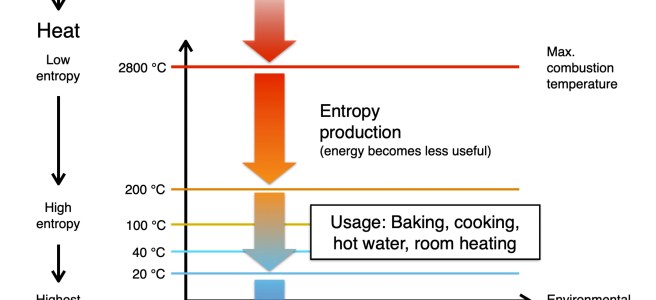
Combustion engines, gas boilers, coal-fired power stations: all these technologies are based on combustion. Physics clearly shows that this is not efficient. We have known for a long time how to do it better. Here the translated (and illustrated) version of my Terra-X blogpost.

Continue reading “Combustion technologies are dead – translated version of my Terra-X blogpost (and yes, it’s because of the entropy)”

Touring India 2024 – Stop 4: Short course and workshop on thermodynamics and optimality of Earth systems at the Islamic University of Science and Technology near Srinagar, Kashmir

Our last stop is Kashmir, where we hold a weeklong workshop on thermodynamics and optimality in climate, water cycle, ecosystems, renewable energy and sustainability. We have intense and stimulating interactions, hands-on sessions organized by Sarosh and Tejasvi, and an excursion into the mountains.

Continue reading “Touring India 2024 – Stop 4: Short course and workshop on thermodynamics and optimality of Earth systems at the Islamic University of Science and Technology near Srinagar, Kashmir”

New Paper: Estimating #offshore #windpower in the German bight. It describes the depletion effects of the #windenergy resource and its implications for the 70 GW target in an accessible way, based on our Agora Energiewende study. https://doi.org/10.1002/piuz.202201654 https://export.arxiv.org/pdf/2301.01043

Offshore wind energy is rapidly growing, but what happens when more and more wind turbines deplete the regional wind energy resource?

Continue reading “New Paper: Estimating #offshore #windpower in the German bight. It describes the depletion effects of the #windenergy resource and its implications for the 70 GW target in an accessible way, based on our Agora Energiewende study. https://doi.org/10.1002/piuz.202201654 https://export.arxiv.org/pdf/2301.01043”

Can we solve the freshwater problem by taking moisture out of the atmosphere with dehumidifiers? When we look at how the hydrologic cycle does its work, we get a straight and clear answer: no, we don’t solve the problem!

In Germany, the construction of Tesla’s Gigafactory near Berlin draws its attention, including its substantial need for freshwater. Despite its many lakes, the area around Berlin is among the driest in Germany. The atmosphere contains water vapor, and it seems like a tempting source for freshwater, just sitting there to be harvested by some form of technology. This is what a company claims to do (and quite a few others elsewhere as well). But can this promise hold up?

Continue reading “Can we solve the freshwater problem by taking moisture out of the atmosphere with dehumidifiers? When we look at how the hydrologic cycle does its work, we get a straight and clear answer: no, we don’t solve the problem!”