New article: Entropy explains why combustion is so inefficient, why electricity is so much better, and how the energy transition is dramatically increasing efficiency

The new article (original in German) explains the energy transition from a simple but fundamental physical perspective. And something very basic sooner or later leads us to entropy. It helps us understand why electricity-based technologies are much more efficient than those that use combustion and heat as an intermediate step. And why the energy transition is therefore much more of a technical revolution, namely away from heat and towards electricity, with significantly higher efficiency. 

Continue reading “New article: Entropy explains why combustion is so inefficient, why electricity is so much better, and how the energy transition is dramatically increasing efficiency”

New paper:  Towards better, simpler, and physically-based estimates of regional wind resource potentials – Testing our KEBA approach with simulations for Kansas

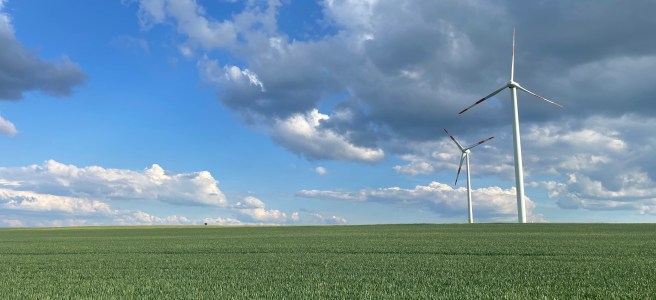
Wind turbines generate electricity by removing kinetic energy from the winds – after all, that is what they are designed to do.  The more wind turbines are deployed within a region, the more the wind speeds must be reduced, thereby impacting the wind resource potential of the region.  In our new paper we tested our KEBA approach with much more complex numerical weather simulations and found that accounting for the removal of kinetic energy captures the dominant effect, but one also needs to distinguish between daytime and nighttime conditions.  This removal effect lowers the resource potential of Kansas by more than 60%, but still yields substantial amounts of electricity – more than Germany currently consumes. More infos in the blogpost and in the paper.

Continue reading “New paper:  Towards better, simpler, and physically-based estimates of regional wind resource potentials – Testing our KEBA approach with simulations for Kansas”