

We were back in India, spending a week at the IIT Roorkee to teach a short course on the Second Law in the Earth System Science, giving talks and having discussions at IIT Gandhinagar, IIT Bombay, IISER Pune and IITM. Find out more on what we did and discussed, look at a few photos, and some related papers in this blogpost.
It seems to become a habit for us to go to India in March. We already did this the last two years. We use this trip to connect and talk to colleagues, introduce students to the role of entropy and the second law in Earth system science, and to explore common interests based on thermodynamics to develop more momentum. And, of course, enjoy the good food and company, and have a great time!
Why Thermodynamics?
The key reason why we talk and discuss about applying thermodynamics to Earth system science is that it adds another constraint – specifically, on the dynamics of processes. For instance, atmospheric motion is generated by heating differences, driving heat engines that provide the power to set things into motion. Combined with the effect that motion has on energy balances – that it transports heat and depletes temperature differences – it results in another limit, the maximum power limit.
This limit on power then constrains dissipative processes associated with motion. As it turns out, it works really well, so we can derive surface temperatures and heat fluxes from it and understand the processes that shape climate from quite a different angle.
Likewise, the hydrological cycle is a dissipative system that is maintained away from equilibrium – which would be the state of saturation. Combined with how motion is generated, this view of the hydrological cycle as a dissipative system allows us to estimate evaporation rates, and also precipitation rates as well as its main interactions on motion (this is very recent work that we still need to publish).
And when it comes to renewable energy and the energy transition, thermodynamics also plays a central role, sets limits to different forms of renewable energy, and it can explain why the energy transition results in a vastly more efficient way of how human societies derive useful energy from sunlight.
That’s essentially what we wanted to communicate in our short course and in our various interactions. Including our long-lasting quest to describe the Indian monsoon as a thermodynamic system.
Stop 1: IIT Roorkee
After we arrived in Delhi, we went straight to Roorkee, about 3 hours northeast of Delhi by car. This year, we held a short course in the Department of Hydrology at the IIT Roorkee. Ankit Agrawal, Deepak and their group were great hosts and organizers and ensured a smooth week.

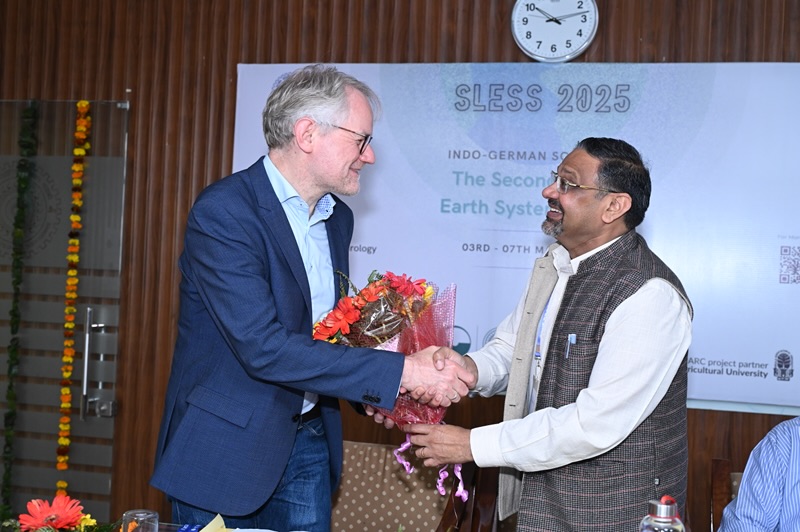
We used a somewhat different format this year compared to the last event in Kashmir: The first half of the day included one morning lecture on thermodynamics followed by an external speaker on a related topic, and then hands-on and discussion sessions in the afternoon. We covered the basics of thermodynamics on Monday (References e.g., Kleidon 2016 or this overview paper in ESD; this blogpost), followed by the application of the second law on climate (Kleidon and Renner 2013; Ghausi et al. 2023; Kleidon and Renner 2018; Kleidon 2021; Kleidon 2023) and global climate change (Tian et al. 2023; Kleidon and Renner 2017; Du et al. 2020; this blogpost) on Tuesday, hydrological cycling and the Indian Monsoon on Wednesday (Kleidon and Renner 2013; Kleidon 2021; Kleidon 2024; this blogpost), and three additional lectures on the Monsoon, extreme rainfall, and the atmosphere on Thursday. On Friday, we talked about the energy transition (Kleidon 2023; Kleidon 2021; Kleidon 2021; Miller and Kleidon 2016; Kleidon 2023; Kleidon 2023; Kleidon and Lesch 2024; Frank et al. 2017). The last topic may seem a bit of an outsider, but I think it is rather important because thermodynamics can illustrate at a quite basic level the different resource potentials of renewable energy and that this transition is essentially unavoidable. Combustion is inherently inefficient, doing the same with electricity is much more efficient. And because this solves a large part of the challenge of global warming, I included it in the short course as well.
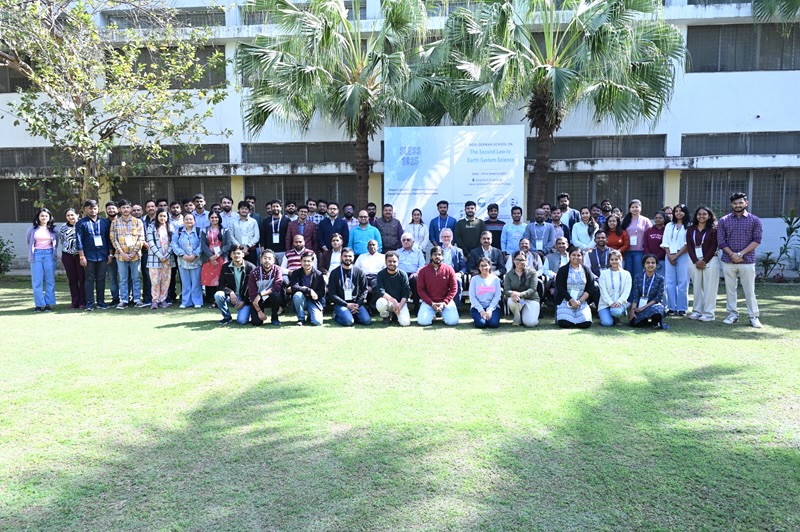
Thinking of the Earth system in terms of the second law is really quite different – so we hoped that with the hands-on and discussions in the afternoon this would become clearer. It certainly led to lots of active and stimulating discussions.
With the external experts we wanted to bridge our thermodynamic view that focuses on the pure physical basics to the more common approaches. So we had Vinod Gaur with us for a general introduction, Bhupen Goswami, an expert on the Indian monsoon, Somnath Baidya Roy from IIT Delhi, an expert on wind energy, two colleagues from IIT Bombay, Akshaya Nikumbh and Vishal Dixit – experts on extreme precipitation and the Indian monsoon -, and Sunil Krishna, a physicist from Roorkee who held a lecture on atmospheric thermodynamics. Some students also presented their works in posters or in a short talk.
Overall, I think this week was really, really good. It was a mix of highly motivated students, great questions and interactions, intense discussions on the Indian monsoon as a thermodynamic system, wonderful food in the evenings and meeting new or reconnecting with colleagues.
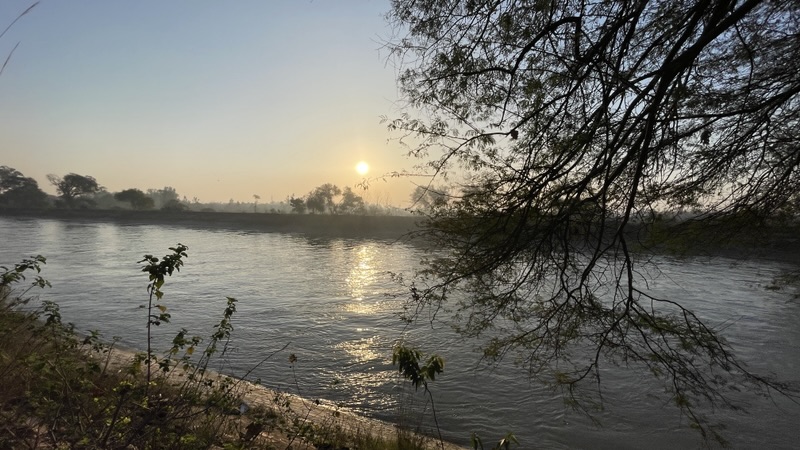
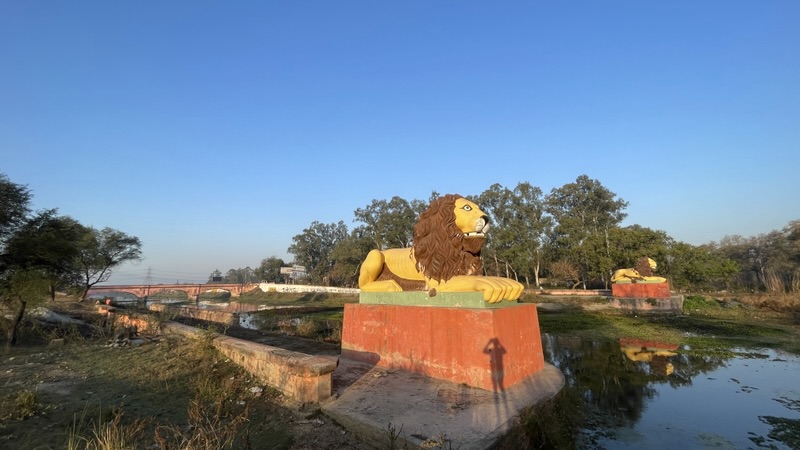
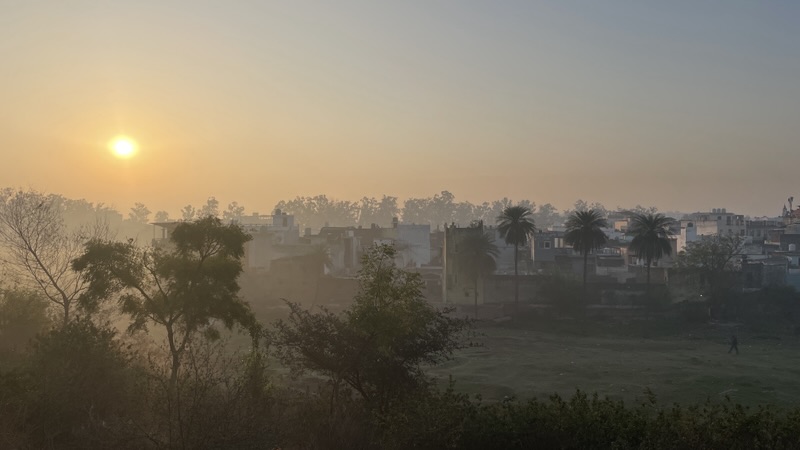
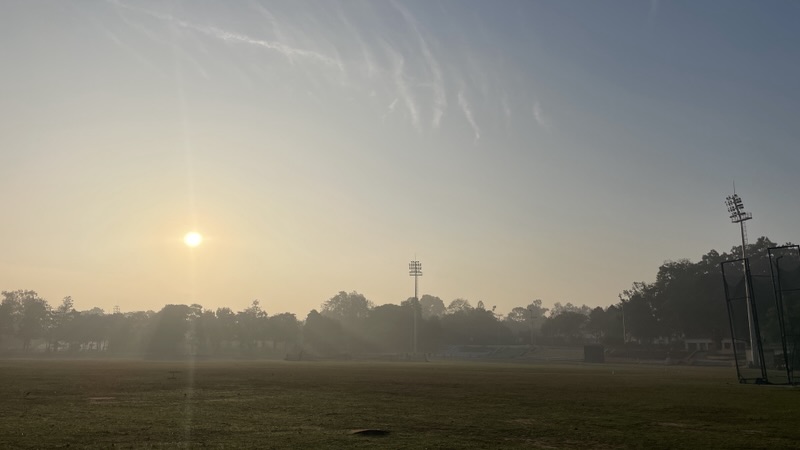
What else? As usual, I explored the surroundings when I went running – either in the local sports grounds on campus, or along the Ganges canal. A wonderful way to explore the neighborhood and to see the everyday life of local people, early in the morning when the day is still fresh.
The weekend: A break in Rishikesh
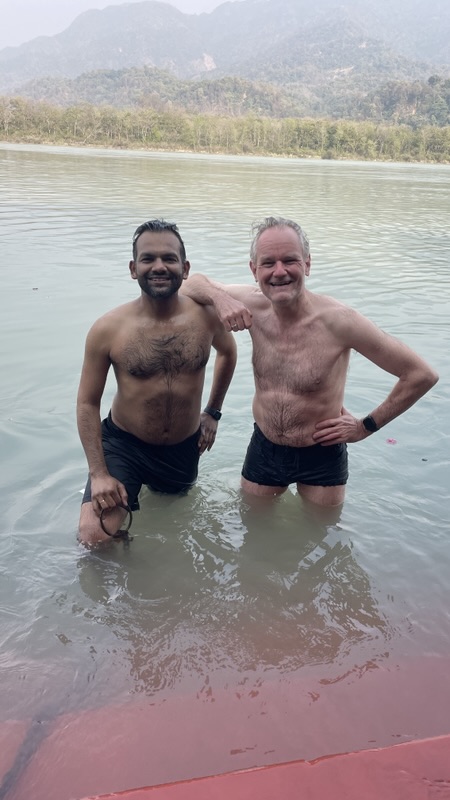
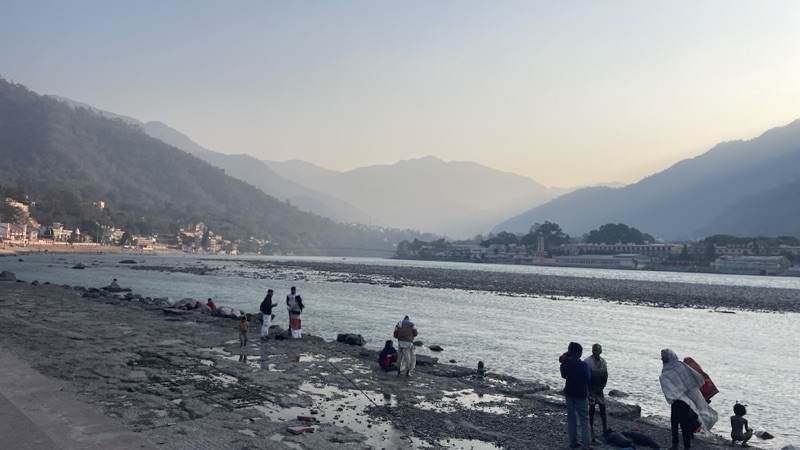
The week was intense. To recover, we planned to spend the weekend in Rishikesh, about an hour away, situated at the Ganges in the foothills of the Himalaya. We had booked a resort ahead of time, spent the time there to take a dip in the Ganges, I discussed the monsoon with Ankit in the jacuzzi, and I got a wonderful massage while Tejasvi, Vinod and his relatives enjoyed the river elsewhere. Time well spent to relax, recover, enjoy the food and company. And to synthesize the outcome of the workshop and the thoughts on the Indian monsoon.


Step 2: IIT Gandhinagar
Our next step took us to the IIT Gandhinagar in Gujarat, which is in the western part of India. Why? Well, when we held our workshop in Florence last fall, one of the online participants was Rishi Singh, an emeritus professor in the Earth sciences department who is still active and follows our work. He contacted me afterwards and said that when we come again, we must stop by. So we did.
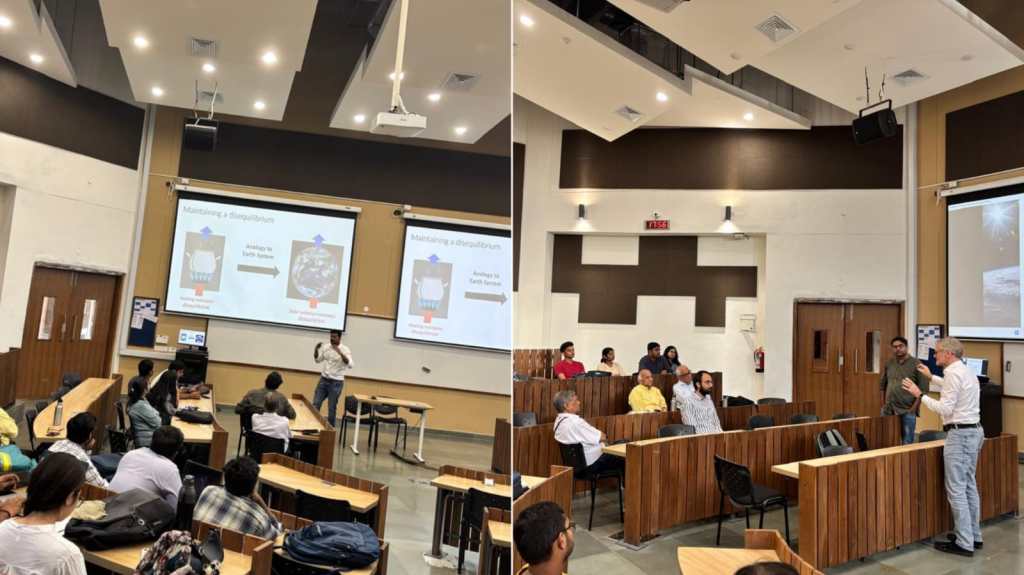
We arrived late, so we went straight to our rooms in the guesthouse on campus. The next morning I started as usual – with a run across campus, exploring the setting. After breakfast Utsav Mannu organised a session in which some students as well as Sarosh and Tejasvi presented some thermodynamics-related work on sediment transport, earthquakes, ecosystems and our more hydrology-related work, and we had our first discussions. We had lunch with the faculty, further discussions in the afternoon, and I gave a talk in the afternoon on “How Entropy and the Second Law of Thermodynamics shape the Earth system” – a mix on the basics, on the main controls of land surface temperatures, hydrological cycling, and how this approach can be used to understand main patterns of global climate change. We closed this intense day with a wonderful Gujarati dinner in town.

Step 3: IIT Bombay
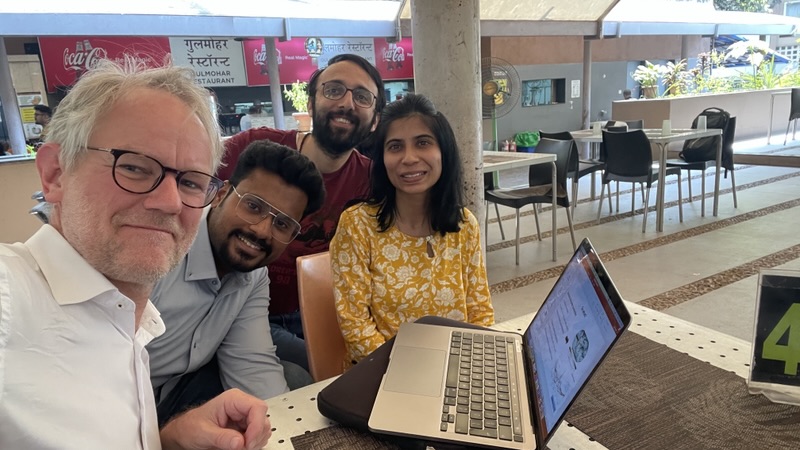
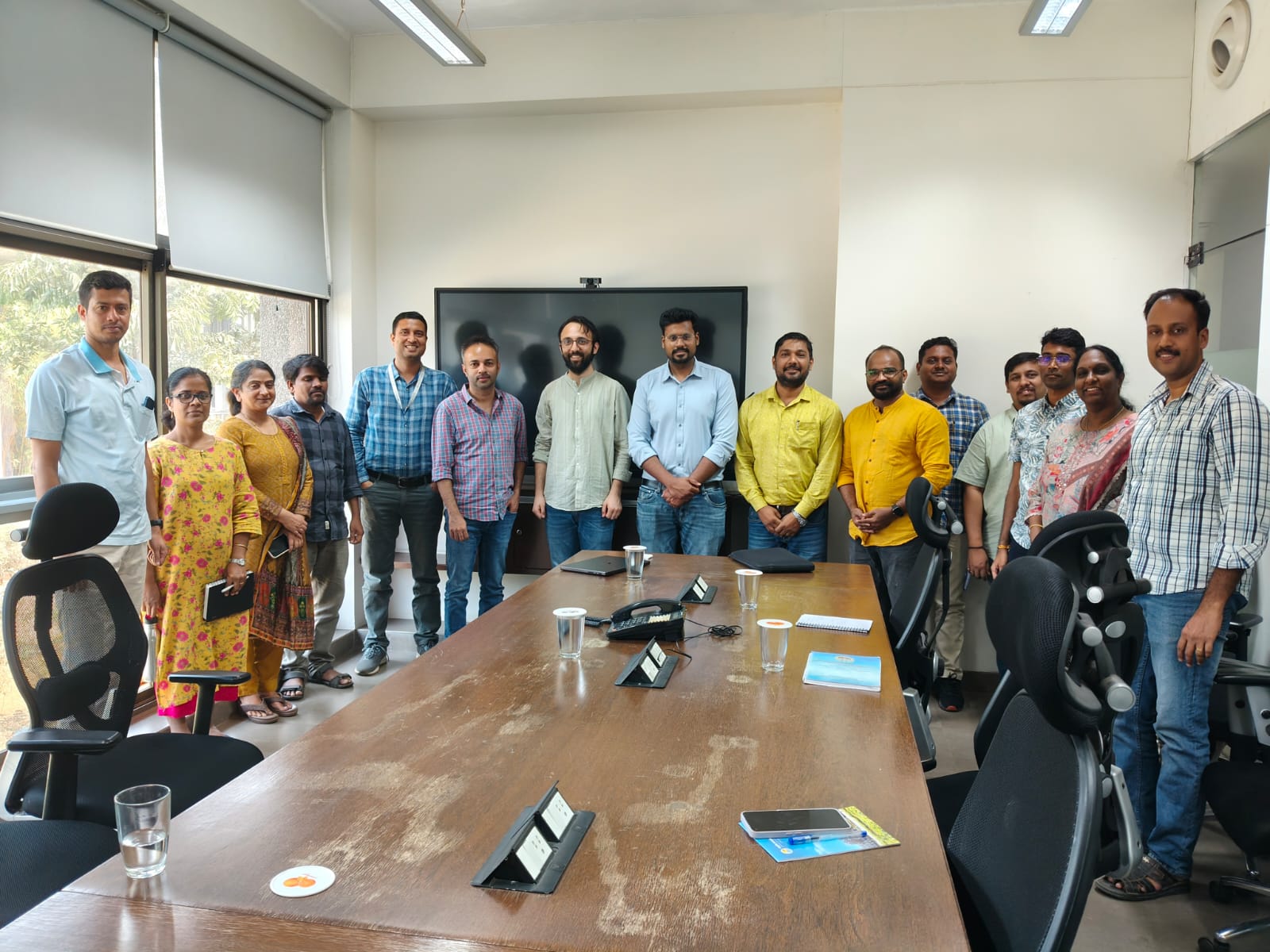
We continued with a short visit at IIT Bombay – the place where Sarosh was a Master student and Tejasvi worked on his PhD. Subimal Ghosh kindly arranged our visit. After lunch Akshaya and I had quite an intensive discussion on the Indian monsoon while Vinod sat next to us with a student in a Cafe, outside, in 38 degrees in the afternoon.
Later I gave a talk on the thermodynamics of hydrological cycling, which included our not-yet-published work on the moist heat engine and precipitation. We met with Basudev Biswal, another hydrologist, and discussed fractal river networks and how one can capture the dynamics such that this is the outcome. More discussions filled the evening.
Step 4: IISER Pune
Our visit was short, unfortunately – the next morning we already left after breakfast and headed to Pune. We arrived around lunch, had lunch with the faculty of the Climate and Earth Science Department at IISER Pune. I discussed quite a bit with Argha Banerjee, who I know from my first visit to India in 2019, where he and Utsav hosted me. We talked about mountainous regions, glaciers, and why high elevations likely show stronger global warming. May be we can do something together to use our approach for better estimating temperatures and change in such heterogeneous landscapes.
The talk was similar to the one at IIT Gandhinagar and focused on “How Entropy and the Second Law of Thermodynamics shape the Earth system“. After the talk, I talked to students for an hour, which I always enjoy. But then, it was time again to leave. Vinod arranged a trip of the two of us to Mahabaleshwar in the Western Ghats, while Sarosh and Tejasvi stayed behind and had more interactions in Pune.
Our trip took quite some time, first south on a freeway, then a country road that went up the impressive slopes of the western Ghats via a lot of curves. We arrived in the dark, just in time to a lovely dinner with Krishnan from the IITM and some of his colleagues from the governing board. After dinner Krishnan and I intensively discussed some of his research, our thermodynamic approach, and other things. Greatly stimulating and enjoyable.
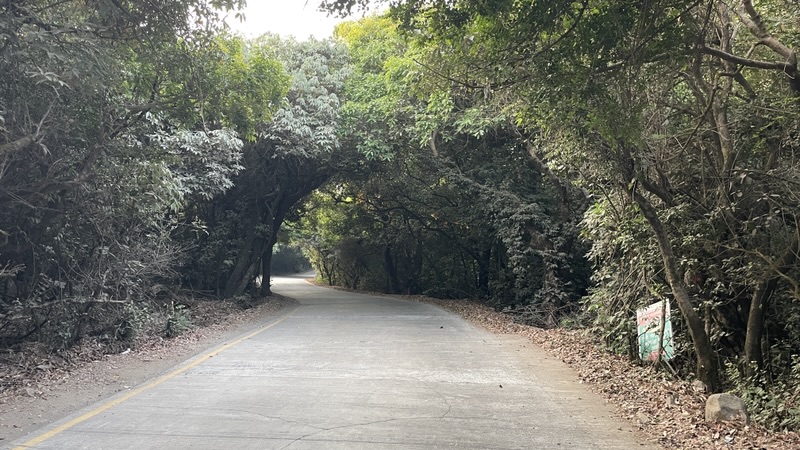
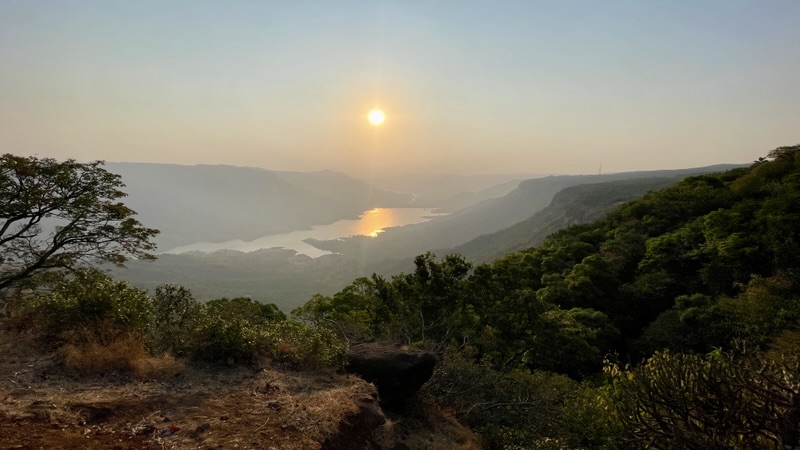
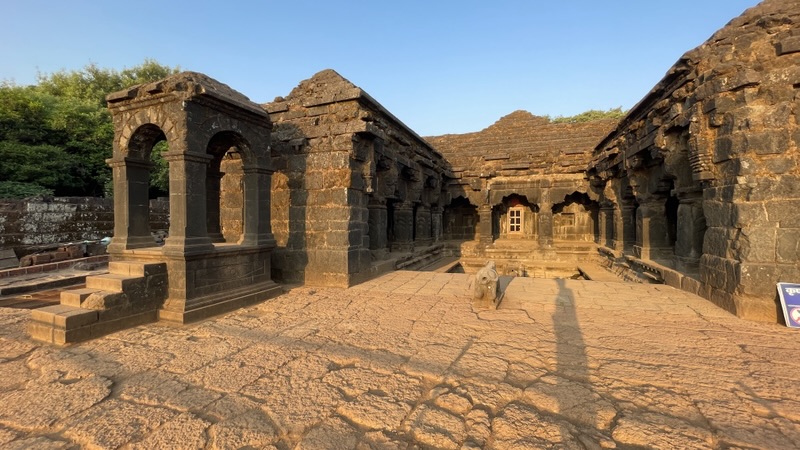
The next morning I went again for a run – a run that I had already planned once I heard the plan from Vinod. I left before sunrise, ran along the ridge on a small road with no traffic, through thick forests. Later I learn that Mahababaleshwar receives a whopping 6000 millimeters of rain a year – compare this to the 700-800 mm/a that Germany receives. So no wonder that the forest is thick. I run on this road to an archeological site that was marked in the map – a fantastic choice as it turns out. An ancient Krishna temple pointing towards the east – apparently the source of the river Krishna -, with wide vistas of the valley below and the rising sun. No one else is there, just birds, the water from the spring, and me.

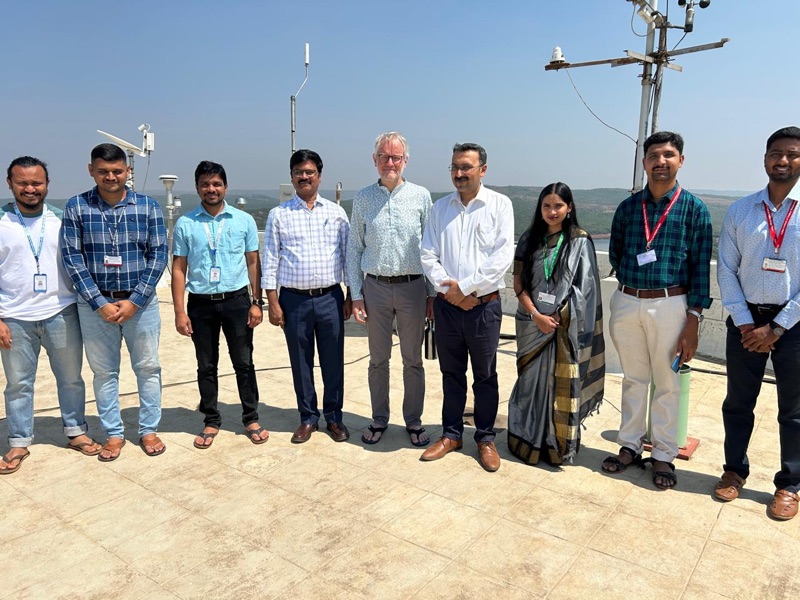
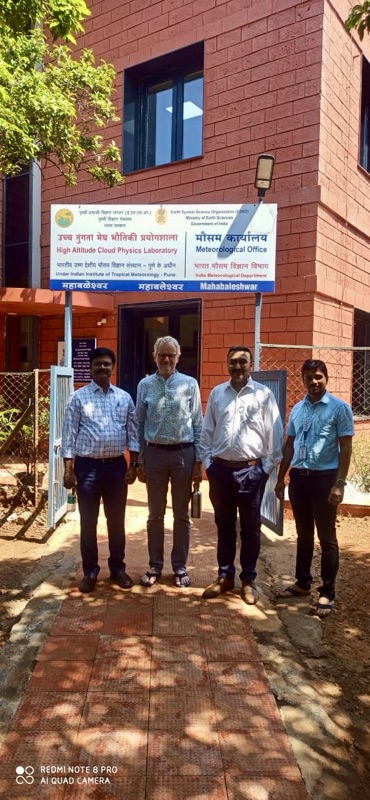
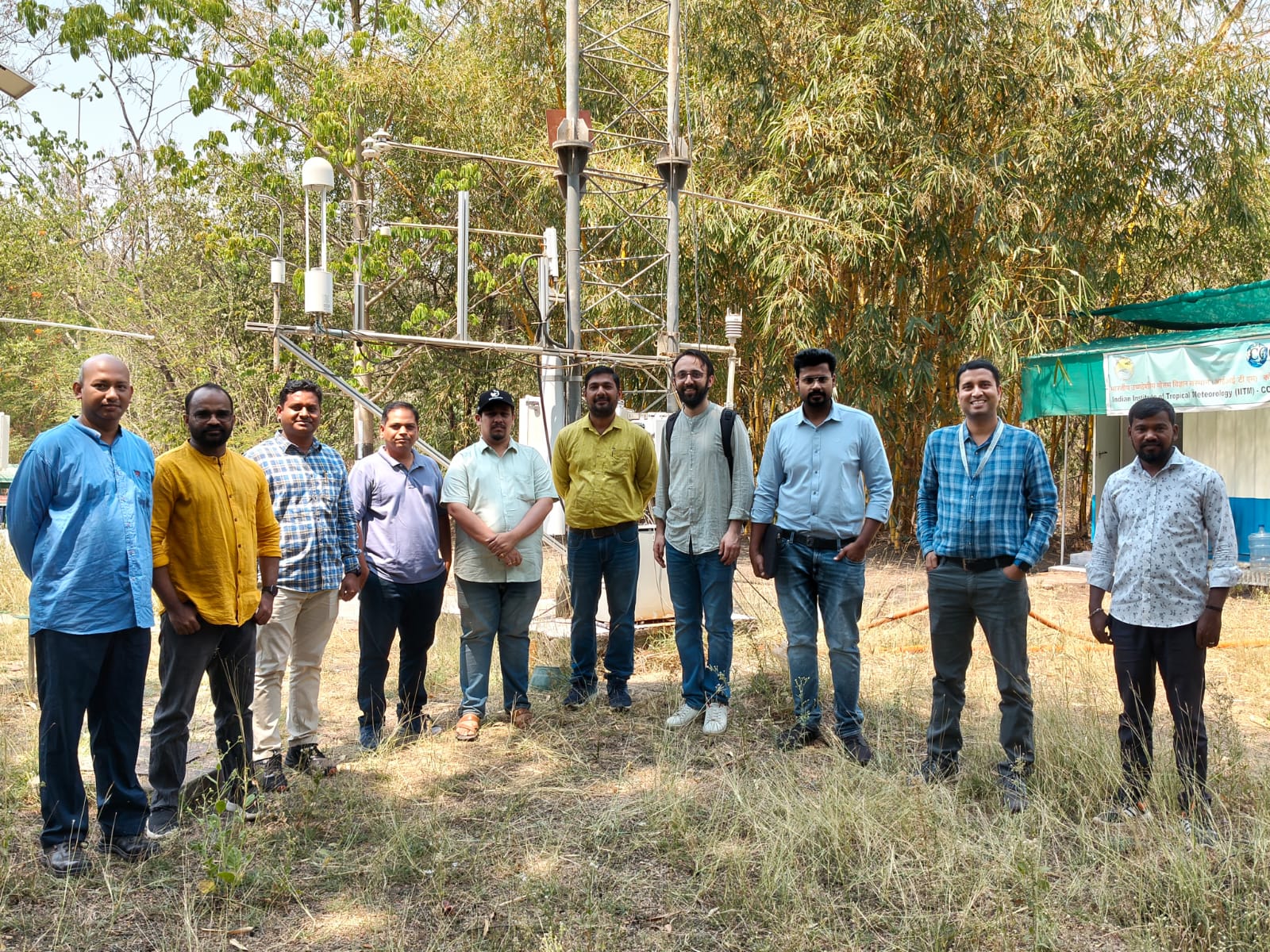
After the breakfast I visit the cloud laboratory of IITM that is nearby while the others do official business. The cloud laboratory uses the simple convenience that Mahabaleshwar is covered in clouds in the Monsoon months. So one can measure easily measure their properties from the roof of the building that is situated on a hill in town. A whole group was ready to explain and show the various measurements that they routinely do, from aerosol concentrations, water droplet sizes, to typical meteorological measurements on the roof.
We meet again for lunch, discuss more, but then we need to leave to bring Vinod to the airport. This took so long that I decided to stay at the airport, spent some more time with Vinod before it is time to say goodbye.
Meanwhile, Sarosh and Tejasvi presented their work at the Centre for Climate Change Research, IITM in Pune, hosted by Bhupendra. They had very engaging discussions, and after lunch, looked at some of the instrumentations. They also met again a colleague who joined us in Kashmir last year. In the afternoon, Sarosh talked more about glaciers, weather stations and global climate change in the Himalayas. We met again at the airport, ready for our flight to Delhi, and then back to Germany.

Final thoughts
Overall, it was a wonderful trip with lots of interactions and stimulation, and it was exhausting at the same time – just like it was in the last years. We will certainly come back again.
In fact, Vinod and I already started to discuss our plans for next year. We probably want to focus on two or three topics, have a combination of a short intro on the thermodynamics combined with talks and discussions, similar to the event in Florence last fall. It would allow us to apply thermodynamics more concretely to current research and challenges related to the Indian Himalaya and global warming, the Indian monsoon, and urban areas. We’ll see how this evolves. It will be great to be back again next year.

 Earthsystem.org