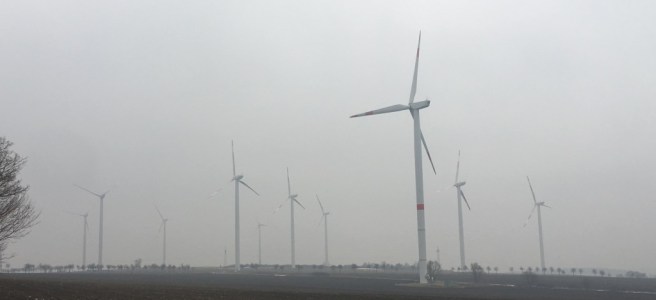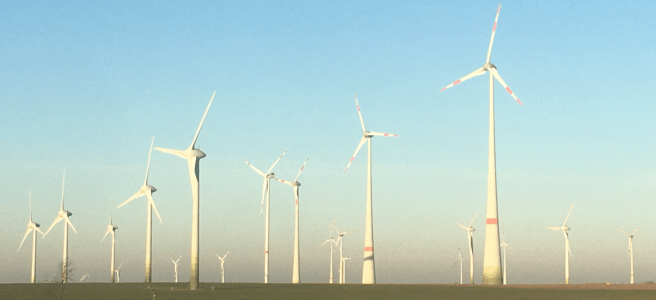
Cool! Ich wurde in die wissenschaftliche Talkshow „Nanotalk“ auf 3sat, einem öffentlich-rechtlichen TV Sender hier in Deutschland, zu Klimawandel und Energiewende eingeladen, zusammen mit Claudia Kemfert und Stefan Thurner. Ausgestrahlt wird sie am Donnerstag Abend um 21:00 auf 3sat, aber jetzt schon als Video online. Wie es dazu kam, wie es war, und eine Sammlung von Links gibt es in diesem Blogpost.
Continue reading “Stromhunger vs. Klimakrise – Das Energiedilemma: Eine Diskussion in Nanotalk auf 3sat – hier mehr Hintergrund und Links zum „Kraftwerk Erde“”Category: Renewable Energy
New article: Entropy explains why combustion is so inefficient, why electricity is so much better, and how the energy transition is dramatically increasing efficiency
The new article (original in German) explains the energy transition from a simple but fundamental physical perspective. And something very basic sooner or later leads us to entropy. It helps us understand why electricity-based technologies are much more efficient than those that use combustion and heat as an intermediate step. And why the energy transition is therefore much more of a technical revolution, namely away from heat and towards electricity, with significantly higher efficiency.
Continue reading “New article: Entropy explains why combustion is so inefficient, why electricity is so much better, and how the energy transition is dramatically increasing efficiency”Neuer Artikel: Entropie erklärt, warum Verbrennung so ineffizient ist, es mit Strom soviel besser geht, und wie die Energiewende die Effizienz gewaltig erhöht
Der neue Artikel erklärt die Energiewende aus einfacher, aber grundlegend physikalischer Sicht. Und ganz Grundlegendes, das führt uns früher oder später zur Entropie. Mit ihr versteht man, warum strombasierte Technologien wesentlich effizienter sind als solche, die Verbrennung und Wärme als Zwischenschritt nutzen. Und wieso deshalb die Energiewende einer technischen Revolution gleichkommt, nämlich weg von der Wärme und hin zum Strom, mit erheblich höherer Effizienz.
Continue reading “Neuer Artikel: Entropie erklärt, warum Verbrennung so ineffizient ist, es mit Strom soviel besser geht, und wie die Energiewende die Effizienz gewaltig erhöht”Neu auf youtube und als Terra-X Kolumne: internationale Trends in der Stromerzeugung zeigen klar, was die Zukunftstechnologien sind – Photovoltaik und Wind!
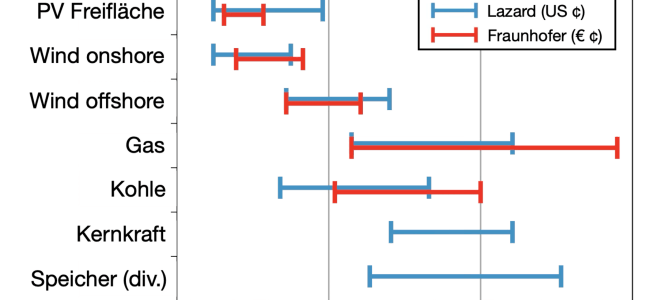
In der gegenwärtigen Energiedebatte wird viel behauptet – Kernenergie soll wieder auferstehen, China setzt ja eh auf Kohle und Deutschland ginge einen Sonderweg. Ein nüchterner Blick auf Stromerzeugung im internationalen Vergleich zeigt klar: Deutschland geht keinen Sonderweg, sondern ist Vorreiter. Mehr dazu in der Terra-X Kolumne mit Harald Lesch und als Youtube Video. Und demnächst als Artikel in Physik in unserer Zeit.
Terra-X Kolumne und auf youtube: Dunkelflauten – sind zwar blöd, aber eigentlich kein Problem. Mehr Infos und Links in diesem Blogpost
In der neuen Terra-X Kolumne geht es um Dunkelflauten – also Wetterlagen, in denen Windenergie und Photovoltaik nicht so viel leisten, wie wir an Strom brauchen. Das ist an sich kein Problem, und es gibt verschiedene Möglichkeiten, diese Differenzen zu decken. In diesem Blogpost gibt’s mehr Hintergrund zur Energiewende, in Form von Artikeln und youtube Videos.
Continue reading “Terra-X Kolumne und auf youtube: Dunkelflauten – sind zwar blöd, aber eigentlich kein Problem. Mehr Infos und Links in diesem Blogpost”Neuer Artikel und Youtube Video: Kann Kernenergie zur Energiewende beitragen? Oder zum Klimaschutz? Nein, weil sie zu teuer, zu unflexibel, und im Klimawandel keine Versorgungssicherheit bietet.
Kernenergie scheint gerade wieder in Mode zu kommen, gerade bei konservativen und populistischen Parteien. Aber ist Kernenergie sinnvoll? Kann sie zur Energieversorgung und Klimaschutz beizutragen? Harald Lesch und ich haben uns dies in einem Artikel in Physik in unserer Zeit genauer angesehen, und kommen zu einer klaren Antwort: Nein, Kernenergie ist zu teuer, zu unflexibel und Versorgungssicherheit bietet sie bei zunehmender Trockenheit in Deutschland auch nicht.
Continue reading “Neuer Artikel und Youtube Video: Kann Kernenergie zur Energiewende beitragen? Oder zum Klimaschutz? Nein, weil sie zu teuer, zu unflexibel, und im Klimawandel keine Versorgungssicherheit bietet.”New paper: Towards better, simpler, and physically-based estimates of regional wind resource potentials – Testing our KEBA approach with simulations for Kansas
Wind turbines generate electricity by removing kinetic energy from the winds – after all, that is what they are designed to do. The more wind turbines are deployed within a region, the more the wind speeds must be reduced, thereby impacting the wind resource potential of the region. In our new paper we tested our KEBA approach with much more complex numerical weather simulations and found that accounting for the removal of kinetic energy captures the dominant effect, but one also needs to distinguish between daytime and nighttime conditions. This removal effect lowers the resource potential of Kansas by more than 60%, but still yields substantial amounts of electricity – more than Germany currently consumes. More infos in the blogpost and in the paper.
Continue reading “New paper: Towards better, simpler, and physically-based estimates of regional wind resource potentials – Testing our KEBA approach with simulations for Kansas”Touring India 2024 – Stop 4: Short course and workshop on thermodynamics and optimality of Earth systems at the Islamic University of Science and Technology near Srinagar, Kashmir
Our last stop is Kashmir, where we hold a weeklong workshop on thermodynamics and optimality in climate, water cycle, ecosystems, renewable energy and sustainability. We have intense and stimulating interactions, hands-on sessions organized by Sarosh and Tejasvi, and an excursion into the mountains.
Continue reading “Touring India 2024 – Stop 4: Short course and workshop on thermodynamics and optimality of Earth systems at the Islamic University of Science and Technology near Srinagar, Kashmir”Touring India 2024 – Stop 2: Visiting Aligarh Muslim University in Aligarh, about 130 km east of Delhi
Our next stop is Aligarh Muslim University – the home and Alma Mater of Sarosh, who just completed his PhD in my group. We visit the campus, talk thermodynamics, meet faculty and Sarosh’s family.
Continue reading “Touring India 2024 – Stop 2: Visiting Aligarh Muslim University in Aligarh, about 130 km east of Delhi”Neuer Blogpost: Heizt Photovoltaik das Klima auf? Ein Blick auf die Energiebilanz und die Größenordnungen zeigt, dass mögliche Effekte durch Photovoltaik vernachlässigbar klein sind
Ich bekomme ab und zu Anfragen, ob Photovoltaik nicht auch das Klima aufheizt. Solarpaneele sind ja schliesslich dunkel und heizen sich in der Sonne ordentlich auf. Ein guter Grund, mal einen Blick auf die Energiebilanz und Ausbauziele zu werfen, um zu verstehen, dass die möglichen Auswirkungen auf Temperatur gering sein werden.

Warum Photovoltaik die Königin der Effizienz ist: mehr Hintergrund und Literaturhinweise zur ZDF Terra-X Kolumne
Photovoltaik ist die Energie der Zukunft – wie ich es kürzlich auf dem Terra-X Blog beschrieben habe. Aber warum? Das kann man recht einfach aus grundlegender Physik erschliessen. Genauer gesagt, es geht um Entropie, und wie sich aus Sonnenlicht am effizientesten Energie gewinnen lässt. Und daraus zeigt sich, dass die Photovoltaik nahezu unschlagbar ist in ihrer Effizienz. Hier gibt‘s mehr Hintergrundinfos und Links zu Literatur.

New paper: How much wind energy is there in Germany? We estimate the efficiency losses and impacts of wind energy expansion at 200 GW in Germany using a simple, physical approach.
The expansion of wind energy plays a central role in the energy transition. But how much can actually be used, and how strongly is the atmosphere affected? I am currently receiving a number of inquiries about this, e.g., based on a video which uses earlier work (Kleidon 2019, Kleidon 2021). Conveniently, a new paper has just been published in Physik in unserer Zeit, which answers exactly these questions.
Continue reading “New paper: How much wind energy is there in Germany? We estimate the efficiency losses and impacts of wind energy expansion at 200 GW in Germany using a simple, physical approach.”Neuer Artikel: Wieviel Windenergie gibt es in Deutschland? Wir schätzen die Effizienzeinbußen und Auswirkungen des Ausbaus der Windenergie auf 200 GW in Deutschland mit einem einfachen physikalischen Ansatz ab.
Im Rahmen der Energiewende spielt der Ausbau der Windenergie eine zentrale Rolle. Aber wieviel lässt sich eigentlich nutzen, und wie stark wird die Atmosphäre beeinflusst? Dazu erhalte ich gerade eine ganze Reihe von Anfragen, auch aufgrund eines Videos, welches sich auf frühere Arbeiten von mir (Kleidon 2019; Kleidon 2021) bezieht. Praktischerweise ist dazu gerade ein neuer Artikel von mir in Physik in unserer Zeit erschienen, der genau diese Fragen beantwortet.

#EGU23: It’s April again, and Vienna is calling. We share our recent insights from following the energy through the Earth system. @akleidon @s_ghausi @yinglin_tian
Just like in pre-Corona times, April is the month in which Europe’s largest geosciences union convenes for its General Assembly in Vienna, Austria. We are excited to be there, present our latest research, and look forward to seeing and talking to you there!

New Paper: Estimating #offshore #windpower in the German bight. It describes the depletion effects of the #windenergy resource and its implications for the 70 GW target in an accessible way, based on our Agora Energiewende study. https://doi.org/10.1002/piuz.202201654 https://export.arxiv.org/pdf/2301.01043
Offshore wind energy is rapidly growing, but what happens when more and more wind turbines deplete the regional wind energy resource?
Continue reading “New Paper: Estimating #offshore #windpower in the German bight. It describes the depletion effects of the #windenergy resource and its implications for the 70 GW target in an accessible way, based on our Agora Energiewende study. https://doi.org/10.1002/piuz.202201654 https://export.arxiv.org/pdf/2301.01043”We’ll be at #EGU22, showing how radiation and maximum power shape temperatures, their extremes, the atmospheric circulation and the wind energy resource. @akleidon @s_ghausi @yinglin_tian
Corona is still around, also in Vienna, but the EGU General Assembly will nevertheless happen again, in a hybrid form. We are thrilled to be there physically, giving our 6 minute short talks on our work, and look forward to seeing and talking to you there!
Continue reading “We’ll be at #EGU22, showing how radiation and maximum power shape temperatures, their extremes, the atmospheric circulation and the wind energy resource. @akleidon @s_ghausi @yinglin_tian”“Erneuerbare Energien – einfach nachgerechnet” – unser Beitrag zum MINT Festival der @UniJena am Donnerstag. Hier gibt’s weitere Infos und Links. #moMINTmal21 @MPI_BGC
Wieviel erneuerbare Energie gibt es eigentlich? Reicht sie für die Energiewende in Deutschland? Die Antworten liefern einfache, physikalisch-basierte Abschätzungen, bei der das Erdsystem im Mittelpunkt steht sowie die Umwandlungen von der Energie im Sonnenlicht in andere Formen. Und dabei steht etwas Physik, genauer gesagt, die Thermodynamik im Mittelpunkt. Das Ergebnis ist nicht ganz so, wie man es vielleicht erwarten würde. Nämlich, dass es zwar jede Menge erneuerbare Energie gibt, aber auch, dass die Nutzung der Solarenergie mit großem Abstand auf Platz 1 liegt, und nicht die Windenergie. Selbst im nicht ganz so sonnigen, aber oft windigen Deutschland.
Continue reading ““Erneuerbare Energien – einfach nachgerechnet” – unser Beitrag zum MINT Festival der @UniJena am Donnerstag. Hier gibt’s weitere Infos und Links. #moMINTmal21 @MPI_BGC”#vEMS21: Our updates on using #thermodynamics for land-atmosphere interactions, the precipitation response to #globalwarming, and the #windenergy potential in the German bight
With summer coming to a close, we are back to present new insights from ongoing research in extreme precipitation events, offshore wind energy and thermodynamics at the European Meteorological Society Annual Meeting 2021. The event, which will be held online next week (6 – 10 September 2021), focuses on weather and climate research and services for the achievement of the UN Sustainable Development Goals. Read on to find out more details about when and what each of us will be presenting.
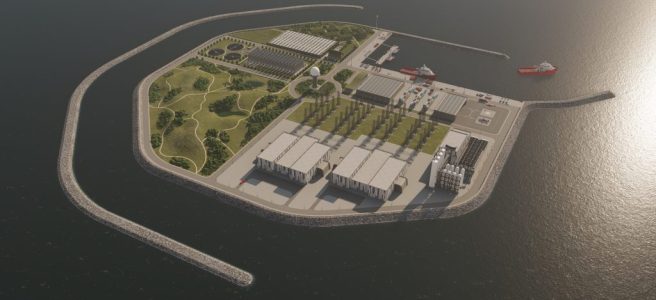
Continue reading “#vEMS21: Our updates on using #thermodynamics for land-atmosphere interactions, the precipitation response to #globalwarming, and the #windenergy potential in the German bight”The Danish energy island in the North sea: By how much could the atmospheric response to many wind turbines lower the expected yields? Using KEBA to derive a simple, physical answer.
Denmark plans to expand offshore wind energy, and to do so, wants to create an artificial island in the North sea. This plan is based on a cost-benefit analysis, which is based on an estimate of how much electricity generation can be expected from wind turbines in that region. Such wind resource estimates use highly resolved wind fields, turbine characteristics as well as their spatial arrangement, but they typically neglect the atmospheric response to the turbines. Each turbine removes kinetic energy from the atmosphere to generate its electricity, so more turbines remove more energy from the atmosphere, leaving a greater impact behind. What this means is that such estimates typically turn out to be too high (see e.g., here), with a greater bias with greater installed capacity, as we have shown for German offshore scenarios, or in a new study just published. So when a colleague asked me about my opinion, I thought this is a good occasion to use our KEBA approach, which takes the atmospheric response into account, and redo the estimate.
Continue reading “The Danish energy island in the North sea: By how much could the atmospheric response to many wind turbines lower the expected yields? Using KEBA to derive a simple, physical answer.”#vEGU21 Next week we’ll present our work on precipitation scaling, diurnal temperature range, offshore wind, and limits to vegetation productivity based on our thermodynamic Earth system view
Thermodynamics rules the world, as well as the science that we present at this year’s EGU General Assembly, which is, alas, virtual rather than in Vienna. It may not be obvious, and our contributions are spread across different sessions. But in the end, we follow the solar energy as it passes through the Earth system, seeking simple, physics-based explanations to simple phenomena: precipitation scaling with temperature found in observations, the diurnal temperature range across regions and vegetation types, also in observations, limits to offshore wind energy in the North sea and what these imply for renewable energy scenarios, and how the really low efficiency of photosynthesis fits to the notion of vegetation being optimal.
Continue reading “#vEGU21 Next week we’ll present our work on precipitation scaling, diurnal temperature range, offshore wind, and limits to vegetation productivity based on our thermodynamic Earth system view”Why does wind energy become less efficient when used at larger scales? Basic physics explains this effect, starting with a very limited ability of the atmosphere to generate wind energy from radiation, as described in my new review just published.
Wind energy plays an important role in the transition to a carbon-neutral, sustainable energy system and is rapidly expanding. So it is a good time to ask how much wind energy there actually is, whether we get close to the limits anytime soon, and why the efficiency of wind energy must decline when used at larger scales. These are basic science questions: How, and why, does the atmosphere actually generate motion, how much does it generate, and how much of it can at most be used? These questions I address in a review paper just published in which I show that it does not take much physics to answer these.
Continue reading “Why does wind energy become less efficient when used at larger scales? Basic physics explains this effect, starting with a very limited ability of the atmosphere to generate wind energy from radiation, as described in my new review just published.”How close is German wind energy use to its limit? A quick check using climate data shows that it currently represents a few percent of the maximum, but may get quite close to its limits by 2050.
From time to time I get e-mails asking me about what our work on wind energy limits implies for the German transition to sustainable energy. With the substantial expansion of wind power in Germany over the last decade, are we getting close to the limits of wind energy that the atmosphere can provide? I looked at the latest ERA-5 weather data product to get answers, and instead of just e-mailing answers, I wrote this blogpost as well to share the insights.
Continue reading “How close is German wind energy use to its limit? A quick check using climate data shows that it currently represents a few percent of the maximum, but may get quite close to its limits by 2050.”AGU Fall Meeting 2020: A brief summary of our contributions and takeways
Corona has impeded everything in 2020 including researchers’ involvement in scientific conferences. However, innovation and the internet made it possible to contribute to large and much anticipated conferences like the AGU Fall Meeting ‘20. Thus, 2 of our PhD researchers, Annu Panwar and Jonathan Minz, presented their scientific results, keeping the spirit of science communication alive, despite tough times.
Continue reading “AGU Fall Meeting 2020: A brief summary of our contributions and takeways”More wind turbines should lead to less wind and less efficient wind turbines, but how to account for this? We showed that our simple spreadsheet KEBA model is about as good as complex WRF simulations to describe this effect.
Wind energy has seen a tremendous increase over the last decades, a trend that is likely to continue into the future with the transition towards a sustainable energy system. Yet, each wind turbine removes energy from the atmosphere, so the more wind turbines there are within a region, the more wind speeds should decline, making each turbine less efficient. This effect has clearly been shown by atmospheric simulation models (e.g., in our previous work), but this effect has typically not been accounted for in regional to continental wind energy resource estimates and energy scenarios for the future. The effect sounds complicated, so what should be done?
Continue reading “More wind turbines should lead to less wind and less efficient wind turbines, but how to account for this? We showed that our simple spreadsheet KEBA model is about as good as complex WRF simulations to describe this effect.”More offshore wind energy is likely to reduce turbine efficiencies, but still a lot of renewable energy can be generated. This is what a new @AgoraEW study shows to which we contributed.
Winds over the ocean typically have higher wind speeds, resulting in high efficiencies of wind turbines and making this an attractive environment for generating a lot of renewable energy. But how efficient are turbines going to be when offshore wind farms become larger and larger? Continue reading “More offshore wind energy is likely to reduce turbine efficiencies, but still a lot of renewable energy can be generated. This is what a new @AgoraEW study shows to which we contributed.”
Making sense of German wind energy
I thought it might be a good idea to meet with wind energy critics to hear what they have to say. But my experience told me otherwise. Perhaps I should have been warned. They are associated with a German organization called „Vernunftkraft“, which has „sensible“ in its name. How presumptuous! It should have been a red warning flag for me. Continue reading “Making sense of German wind energy”